Skip to content
Giallo Siena

The stone itself

Giallo Siena is a yellow marble of Tuscan origin, quarried in the Sovicille district of the province of Siena. The published technical sheet describes it as a medium-grained metamorphic rock: a dense, heterogeneous ground in ochre-yellow, cut through by light reddish-yellow patches, fractures and slender veins running sub-parallel to the grain. It is a compact calcitic stone - the Jurassic sediment, compressed and recrystallised into something that takes a polish and holds an edge.

What it is

A yellow marble of Tuscan origin, with an ochre ground carrying yellow veining and, in places, pale reddish-yellow patches.

A block is not a swatch

The ground is not uniform across a single block, and it is not uniform between blocks. Two blocks of the same material do not carry the same yellow, and the slabs cut from one block differ from each other in both colour distribution and the movement of the grain. Slab grouping is a decision made before the saw, not after it.

Why it arrives resin-backed

Under magnification the rock is a calcitic crystalloblastic lithotype made of alternating phaneritic and aphanitic areas, deformed in places, with quartz blasts in the coarser veins, sub-centimetric calcitic nodules and acicular muscovite concentrated along slender veinlets. Which is the technical description of a brecciated marble, and it is the reason this stone is normally supplied resin-backed: the white calcite fault lines run through it.

Where it goes

It is a stone for interiors and for the parts of a building that are seen rather than walked on: floors in a hall, a stair, a worktop, a wall lining, a bathroom, a piece of furniture. The published slip resistance on the honed surface is 43 USRV dry and 16 wet, and the wet figure is the one to design around in a wet area. Calcite content runs at 95 to 98 per cent, so the stone is acid-sensitive: food, drink and cleaners etch it, and sealing reduces absorption without making it acid-proof.

The historic record is unusually strong for a yellow stone. It was laid in the floor of the Duomo of Siena, carried to the Reggia di Caserta, and appears in the Basilica of San Marco and at Teatro La Fenice in Venice. A stone that was already being cut for palaces in the sixteenth century is a stone whose supply chain is not a question.

Sizes and formats
The material

What the stone looks like

The pictures below are published trade photography of this stone, taken by others. They are here so the material can be judged — the ground, the veining and the way the figure moves across a piece. They are not photographs of our slabs or of a project we supplied, and the colour on a screen is not a colour-match. Ask for a sample, and we will quote against the batch.
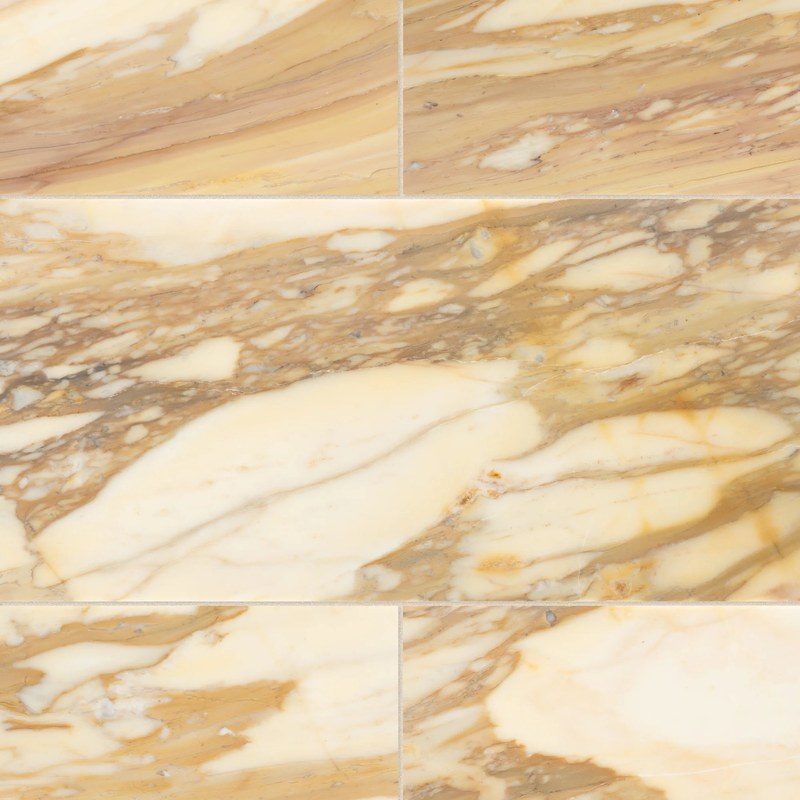
Several slabs of the stone laid side by side, showing how the yellow-brown network moves from one piece to the next and how no two of them carry the same figure.Reference photograph

Several slabs of the stone laid side by side, showing how the yellow-brown network moves from one piece to the next and how no two of them carry the same figure.

Published trade photograph · not our goods or our project · screen colour is not a colour-match
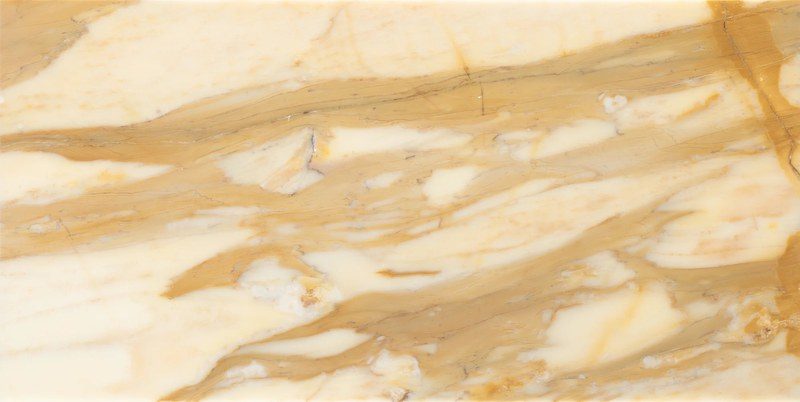
A close view of the pale cream ground carrying a yellow-brown network, with the fine clasts and the thin angular fractures that come with a brecciated marble.Reference photograph

A close view of the pale cream ground carrying a yellow-brown network, with the fine clasts and the thin angular fractures that come with a brecciated marble.

Published trade photograph · not our goods or our project · screen colour is not a colour-match
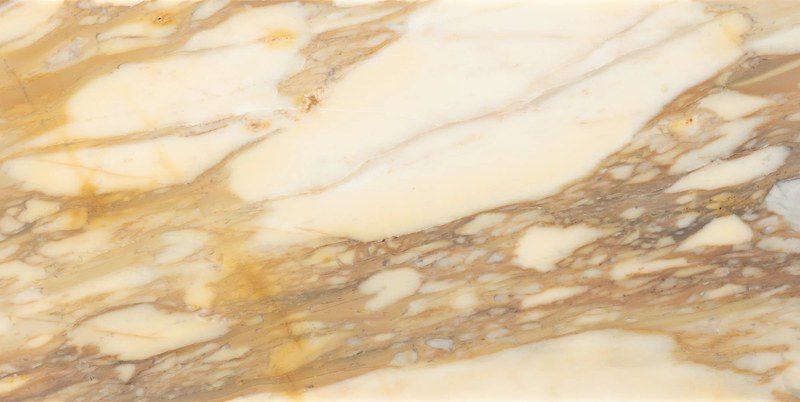
The same lithotype seen with the network running across the piece in the other direction, and the reddish patches that sit in the paler ground.Reference photograph

The same lithotype seen with the network running across the piece in the other direction, and the reddish patches that sit in the paler ground.

Published trade photograph · not our goods or our project · screen colour is not a colour-match
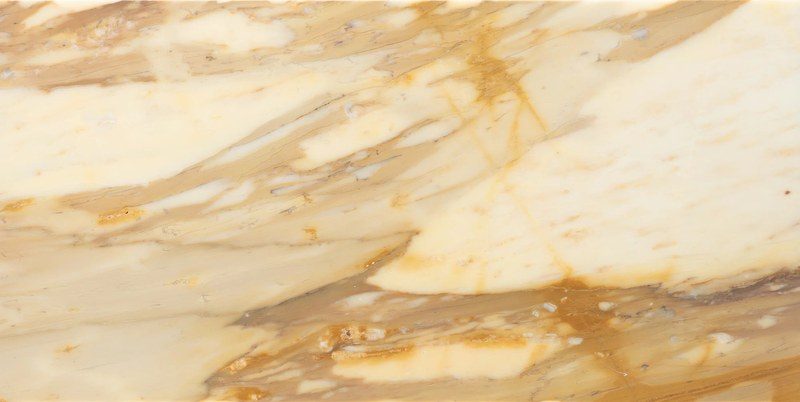
The deeper golden block, where the ground reads more ochre and the brown network is heavier, and the vein direction is read before the saw passes.Reference photograph

The deeper golden block, where the ground reads more ochre and the brown network is heavier, and the vein direction is read before the saw passes.

Published trade photograph · not our goods or our project · screen colour is not a colour-match
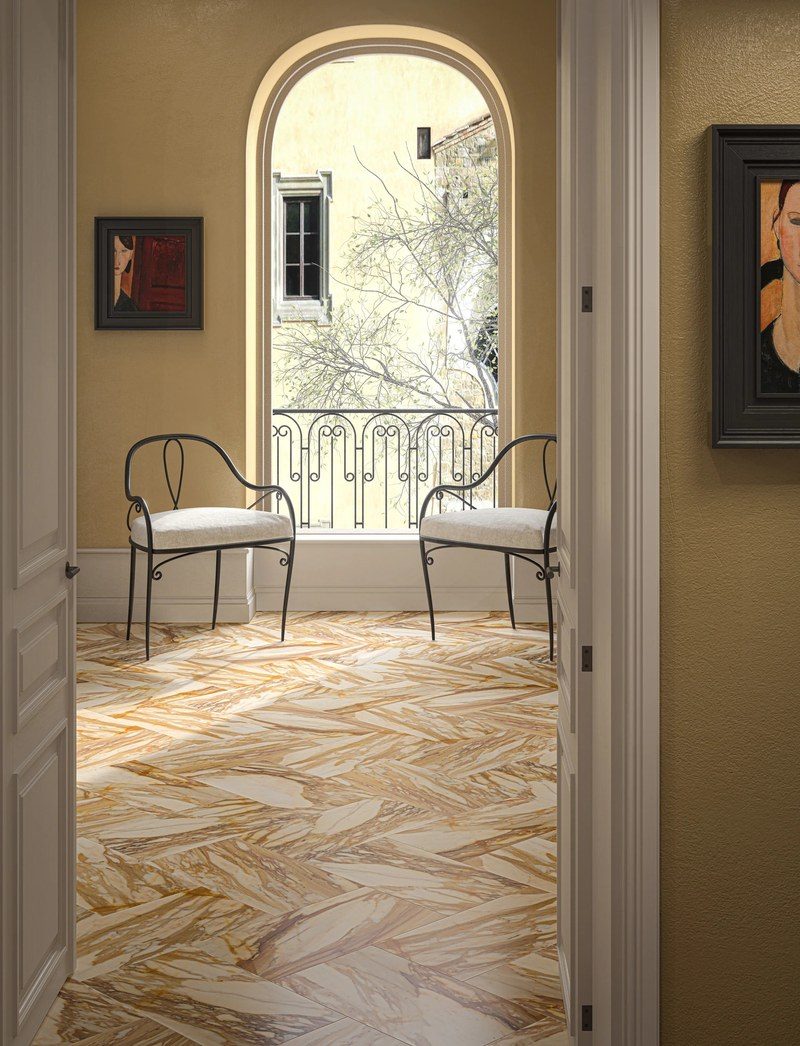
The stone laid as a floor across an entrance hall, cut into panels and set so the figure runs from one to the next.Reference photograph

The stone laid as a floor across an entrance hall, cut into panels and set so the figure runs from one to the next.

Published trade photograph · not our goods or our project · screen colour is not a colour-match
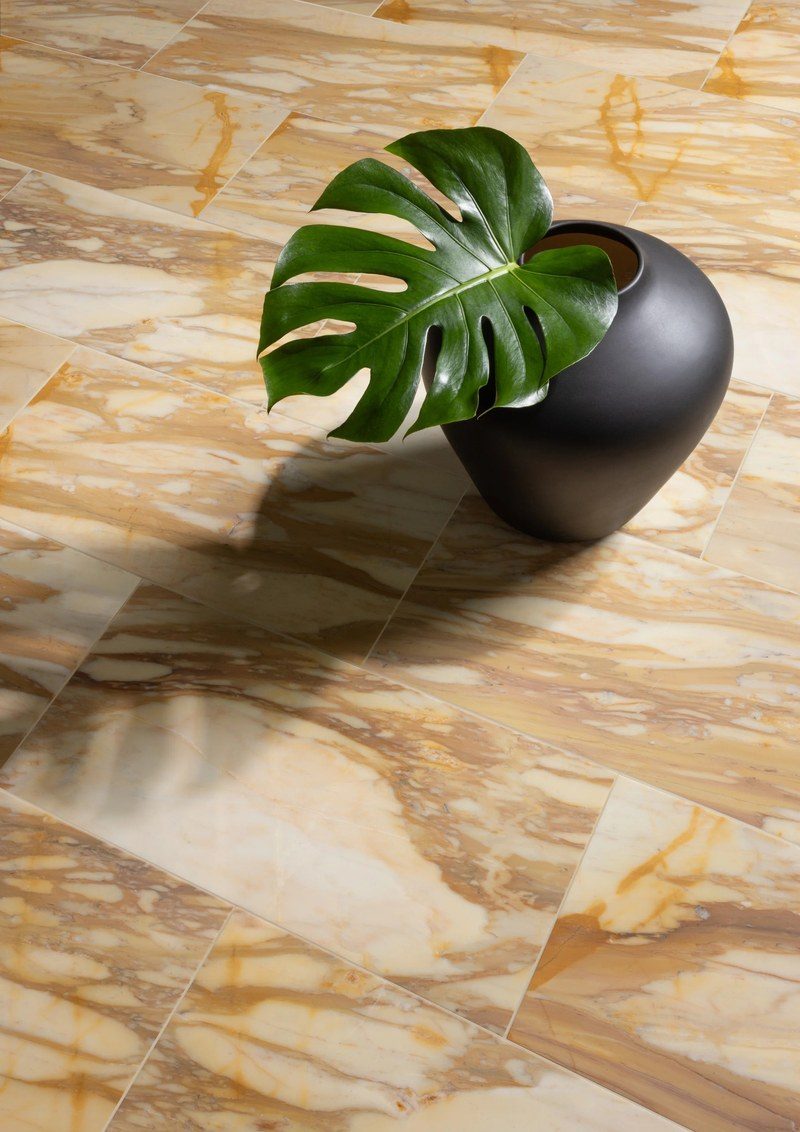
The stone used as a worktop surface, seen close enough for the polish and the depth of the ground to read.Reference photograph

The stone used as a worktop surface, seen close enough for the polish and the depth of the ground to read.

Published trade photograph · not our goods or our project · screen colour is not a colour-match

Where these came from

The pictures below are published trade photography of this stone, taken by others. They are here so the material can be judged — the ground, the veining and the way the figure moves across a piece. They are not photographs of our slabs or of a project we supplied, and the colour on a screen is not a colour-match. Ask for a sample, and we will quote against the batch.

Our own photographs

The block photographs, the workshop and the finished installations on this site were taken by us. They are in the gallery and on the fabrication page.

See our own photographs
Specification

The published figures

These are the figures published for the material, tested to EN standards. They are not a supplier's description of a block.

Test values attributed to the marble laboratory of the Politecnico di Torino. Where a figure is ours rather than published, it is marked as ours.

Water absorption
0.04% to 0.12% (published values across sources)EN 13755-08 water absorption at atmospheric pressure
Apparent density
2710 kg/m³ (both published sources agree)EN 1936-07
Open porosity
0.30% (mean) · 0.30 (standard deviation)EN 1936-07
Flexural strength
21.2 to 25.3 MPa (published values across sources)EN 12372-07 flexural strength in natural conditions
After 48 frost cycles
20.1 MPa (mean) · 6.0 (standard deviation)EN 12371-03 flexural strength exposed to 48 frost cycles
Compressive strength
89.4 to 175 MPa (published values across sources)EN 1926-07 uniaxial compressive strength
Slip resistance, honed
43 dry · 16 wetEN 14231-04 slip resistance, honed finishing
Mohs hardness
3 to 4Mohs hardness — the figure that decides whether the stone can take a flame finish
Full technical record
Finishes

What this stone takes, and what it does not

A finish is not a preference, it is a decision with consequences: what the surface takes, how it wears, and how it behaves when it is wet. Each one below carries a verdict - whether it is a standard order on this stone, whether it depends on the block, or whether it is not available here at all.

The full finish dictionary

Polished

A standard order on this stone

A mirror surface. The golden ground reads deeper and the veining gains contrast; reflections of a lit room are the strongest on this stone.

Honed

A standard order on this stone

Soft sheen. The colour reads truer than polished and the texture stays quiet, which is why it suits large floors where gloss would be busy.

Leathered

Possible — ask first

A muted sheen with a tactile grain. It reads as a matte stone with depth rather than a flat one.

Sawed (diamond saw)

A standard order on this stone

A low, directional texture. Unpolished, uncoated, and completely honest about being raw stone.

Natural split (rock face)

A standard order on this stone

A rugged, cleft surface with the stone's own bedding visible.

Enquiry

Tell us what the job needs

Tell us the application, the size and the finish you need, and we will come back with what we can actually supply.

There is no checkout here and there is no price list. A stone enquiry is an agreement about material, size, finish and destination, and the answer depends on those four things. Send them and the reply carries what can actually be shipped.

Request a quote