Where is Giallo Siena marble quarried?
Sovicille, in the province of Siena, Tuscany, Italy.
Naming and identification · Read the full answer
Giallo Siena is a yellow marble of Tuscan origin, quarried in the Sovicille district of the province of Siena. The published technical sheet describes it as a medium-grained metamorphic rock: a dense, heterogeneous ground in ochre-yellow, cut through by light reddish-yellow patches, fractures and slender veins running sub-parallel to the grain. It is a compact calcitic stone - the Jurassic sediment, compressed and recrystallised into something that takes a polish and holds an edge.
The pictures below show this stone in use. The ground, the veining and the way the figure moves across a piece are the things a photograph can tell you and a swatch cannot. The stone, the cutting and the work behind installations like these are what we supply. The colour on a screen is not a colour-match, so ask for a sample and we will quote against the batch.
 Reference photograph
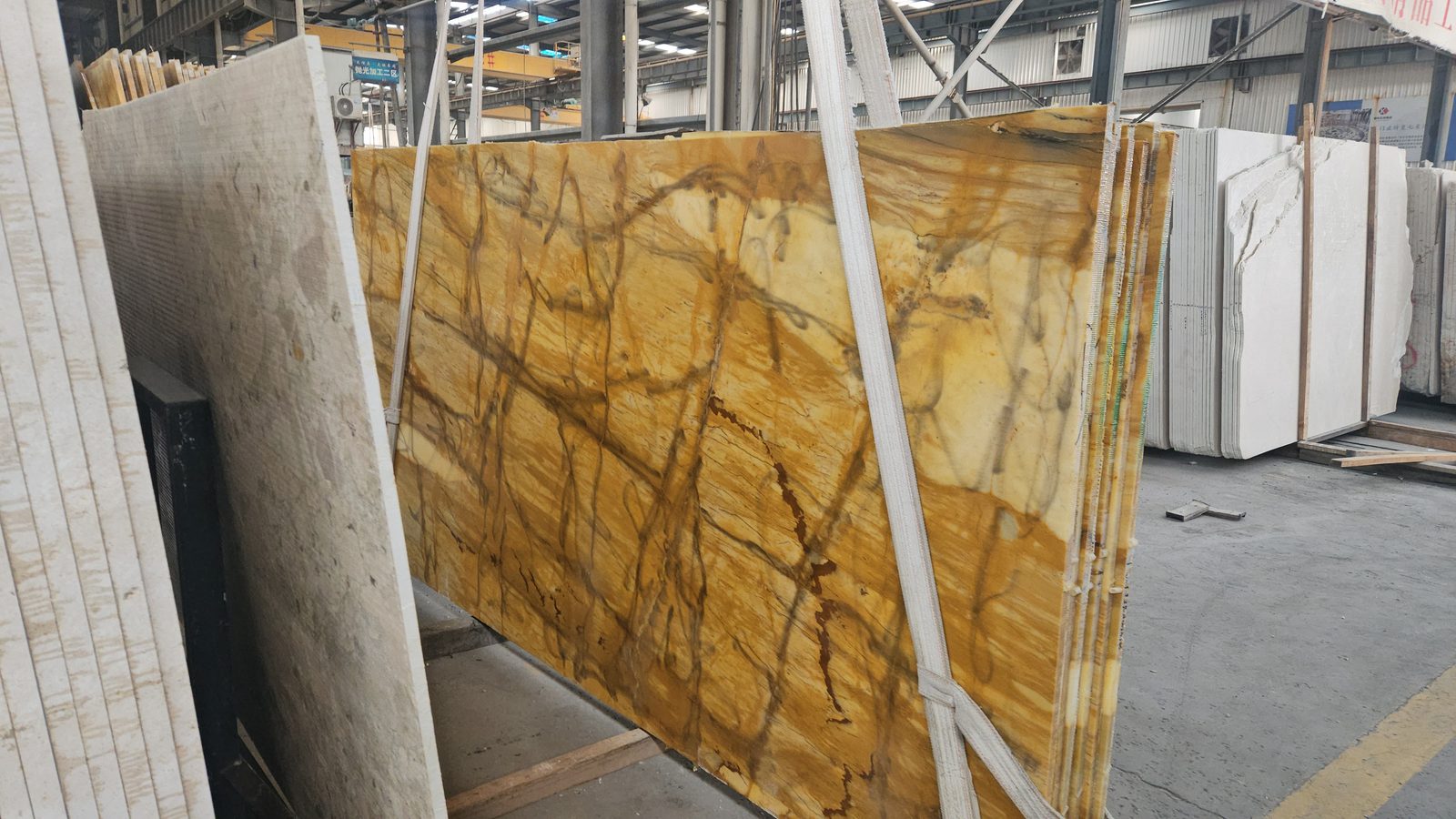
Several slabs of the stone laid side by side, showing how the yellow-brown network moves from one piece to the next and how no two of them carry the same figure.
Published trade photography. It illustrates this lithotype and the way the veining runs; it is not a photograph of goods we cut or of a project we supplied, and the colour on screen is not a colour-match. Ask for a sample before you specify.
 Reference photograph
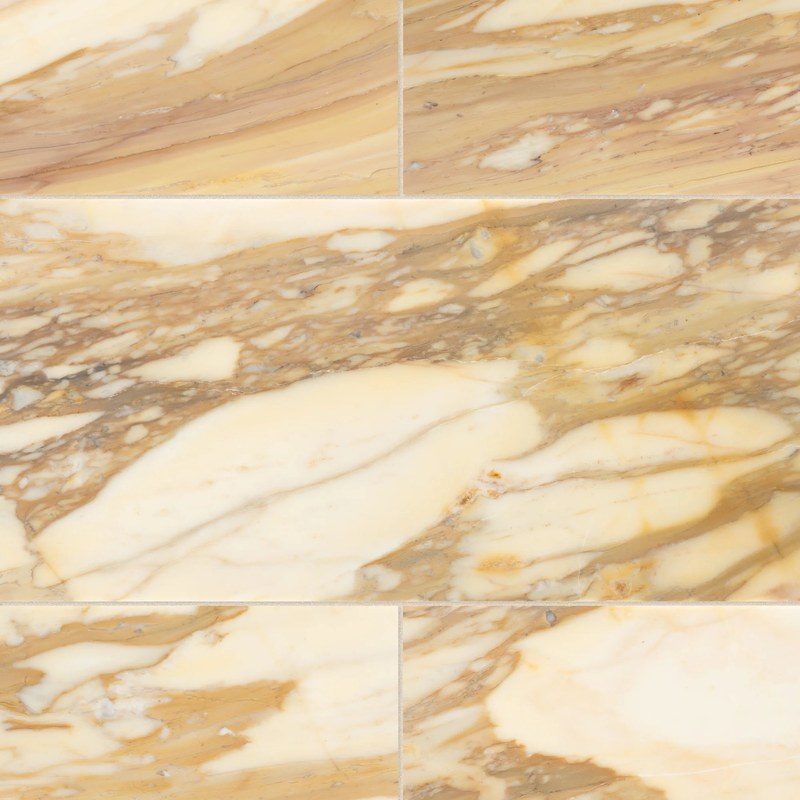
A close view of the pale cream ground carrying a yellow-brown network, with the fine clasts and the thin angular fractures that come with a brecciated marble.
Published trade photography. It illustrates this lithotype and the way the veining runs; it is not a photograph of goods we cut or of a project we supplied, and the colour on screen is not a colour-match. Ask for a sample before you specify.
 Reference photograph
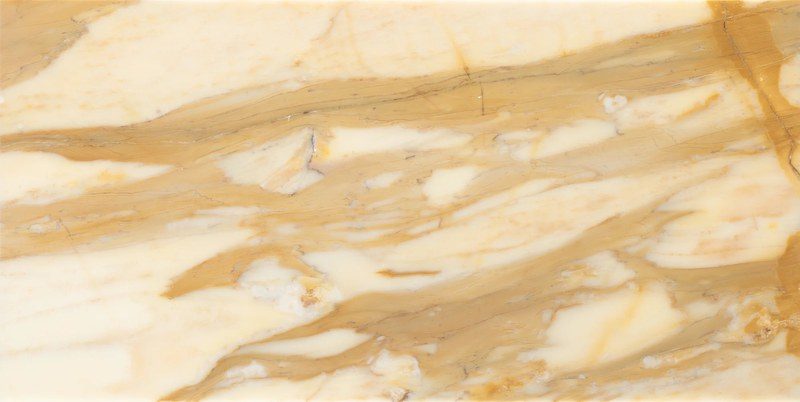
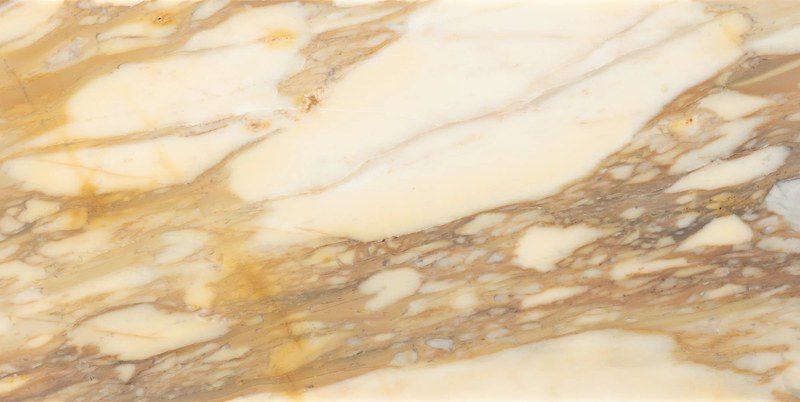
The same lithotype seen with the network running across the piece in the other direction, and the reddish patches that sit in the paler ground.
Published trade photography. It illustrates this lithotype and the way the veining runs; it is not a photograph of goods we cut or of a project we supplied, and the colour on screen is not a colour-match. Ask for a sample before you specify.
 Reference photograph
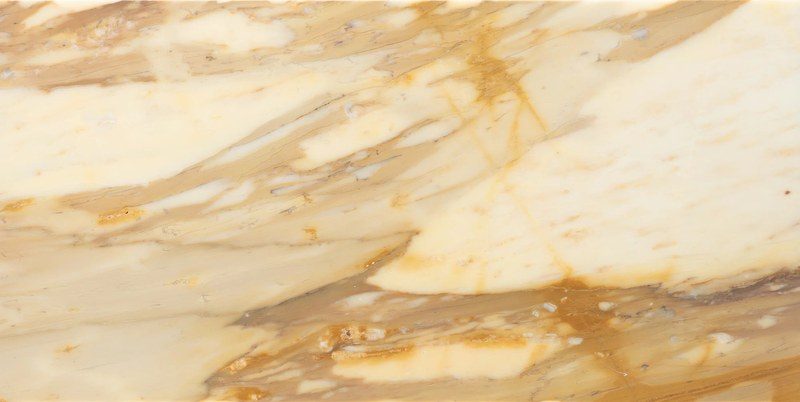
The deeper golden block, where the ground reads more ochre and the brown network is heavier, and the vein direction is read before the saw passes.
Published trade photography. It illustrates this lithotype and the way the veining runs; it is not a photograph of goods we cut or of a project we supplied, and the colour on screen is not a colour-match. Ask for a sample before you specify.
 Reference photograph
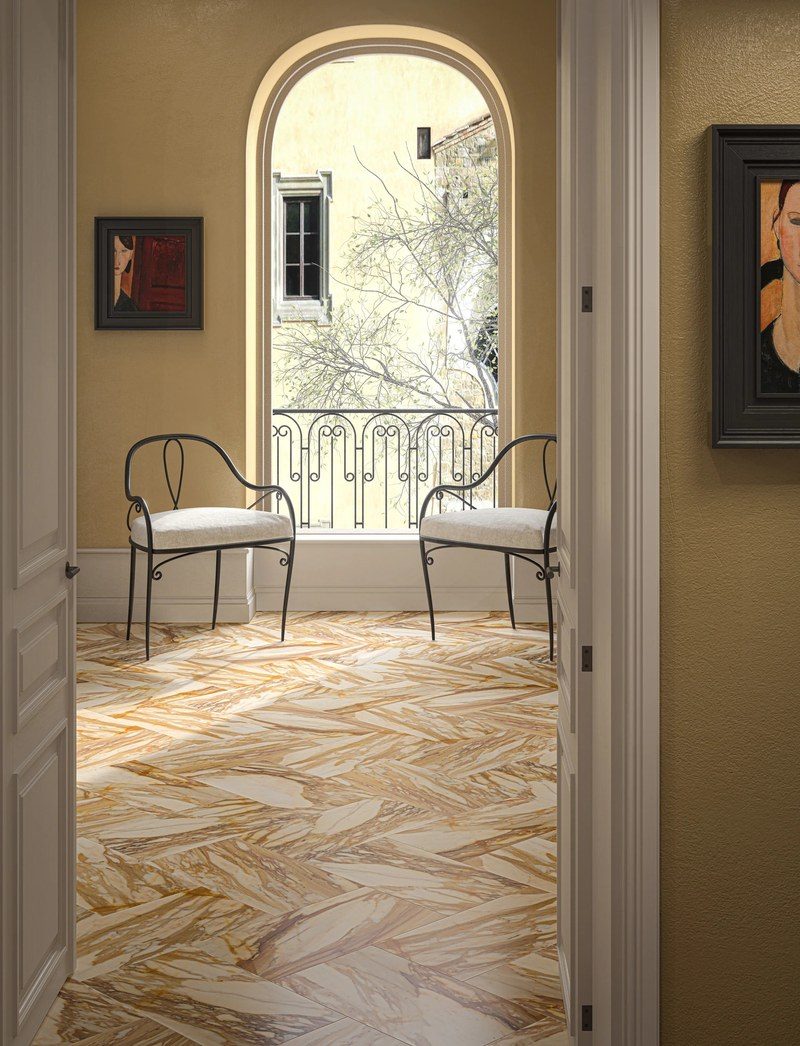
The stone laid as a floor across an entrance hall, cut into panels and set so the figure runs from one to the next.
Published trade photography. It illustrates this lithotype in use; it is not a photograph of a project we supplied, and the colour on screen is not a colour-match. Ask for a sample before you specify.
 Reference photograph
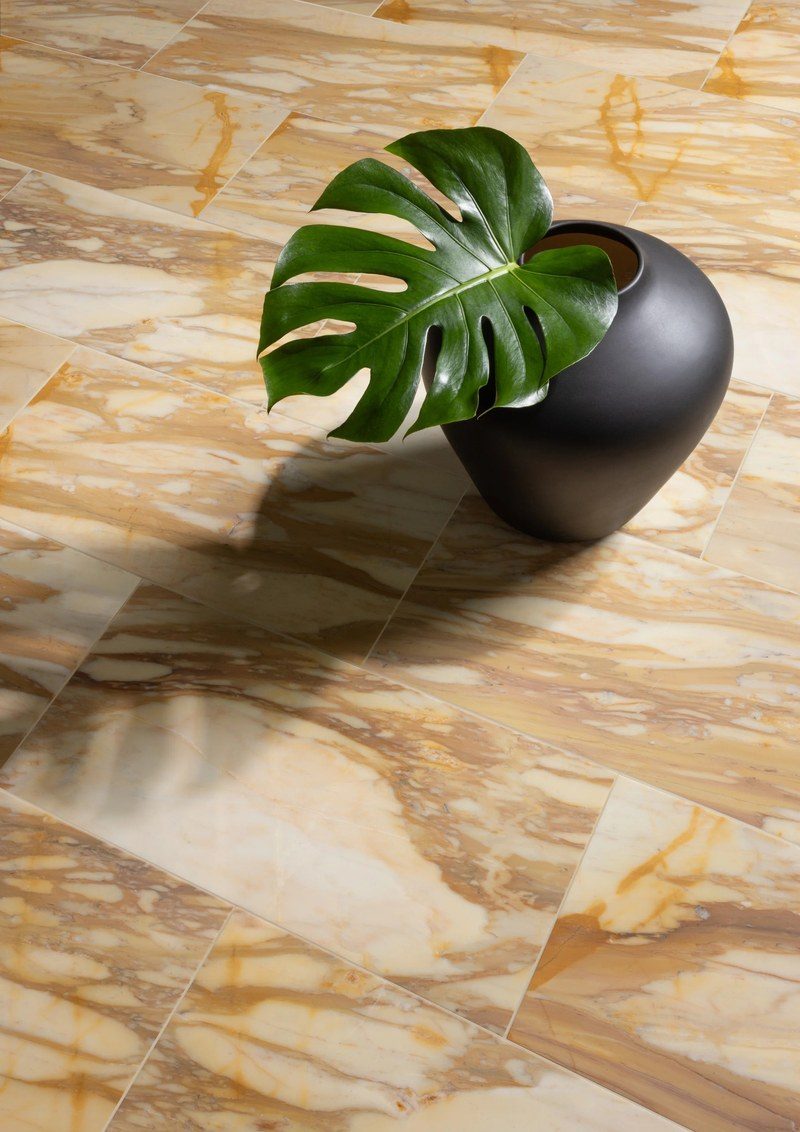
The stone used as a worktop surface, seen close enough for the polish and the depth of the ground to read.
Published trade photography. It illustrates this lithotype in use; it is not a photograph of a project we supplied, and the colour on screen is not a colour-match. Ask for a sample before you specify.
The pictures below show this stone in use. The ground, the veining and the way the figure moves across a piece are the things a photograph can tell you and a swatch cannot. The stone, the cutting and the work behind installations like these are what we supply. The colour on a screen is not a colour-match, so ask for a sample and we will quote against the batch.
The block photographs, the workshop and the finished installations on this site were taken by us. They are in the gallery and on the fabrication page.
See our own photographsSovicille, in the province of Siena, Tuscany, Italy.
Naming and identification · Read the full answer
Giallo Siena, Giallo di Siena, Giallo Siena Unito, Siena Gold, Golden Siena, Siena Giallo, Siena Yellow, Amarillo Siena and Giallo Sienna.
Naming and identification · Read the full answer
They are catalogued separately.
Against other materials · Read the full answer
Because it is a natural stone and it is heavily brecciated.
How it looks · Read the full answer
Natural.
Naming and identification · Read the full answer